
冰与火之歌
Unitree Robotics IPO sparks investor frenzy as policy support fuels capital rush, with sector’s future value tied to continued commercialization_我的网站

一 |
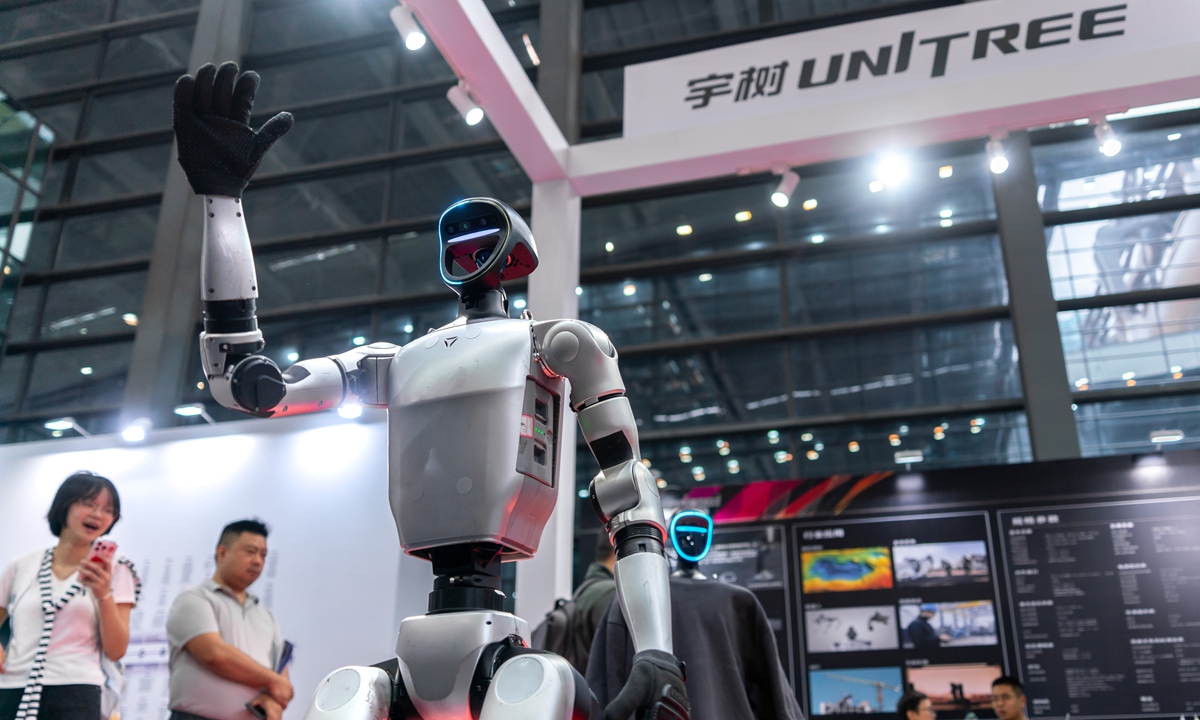
With just one day to go before Chinese humanoid robotics pioneer Unitree Robotics opens subscriptions for its initial public offering (IPO) on Shanghai's STAR Market, investor attention has extended far beyond the company itself, highlighting a broader capital-market rush into embodied intelligence as the sector moves from technological breakthroughs toward commercialization.
As of press time, discussions surrounding the IPO have pushed the topic to the top of trending lists across multiple stock trading platforms. The debate has focused on Unitree Robotics' disclosed short-term financial performance, as well as the potential opportunities for investors from China's policy push to include embodied intelligence and humanoid robots among key areas of medium- and long-term technology and industrial development.
Experts said the wave of IPOs among robotics companies, including Unitree Robotics, represents a shift that allows robot makers to engage more directly with public markets and investors. It also brings companies at different stages of development and pursuing different technological paths into a common valuation framework, promoting market comparisons and competition.
At the same time, the capital-market boom is likely to accelerate a shakeout, separating companies capable of building sustainable business models from those that struggle to turn technological advances into commercial returns.
On Thursday, Unitree Robotics released its announcement on the IPO of shares and listing on the STAR Market. According to the announcement, the offering price was set at 150.80 yuan per share, valuing the company at approximately 61 billion yuan ($9.04 billion) upon listing.
Secondary-market professionals told the Global Times that demand for Unitree Robotics' IPO subscription could be extremely high, meaning the chances of individual investors securing shares are likely to be very limited.
Robotics is currently one of the few categories that can translate AI capabilities into tangible assets with relatively comparable valuation metrics, creating a unique advantage in valuation narratives. This scarcity is one of the key factors drawing the attention of both large and small investors, Tian Feng, former dean of SenseTime's Intelligence Industry Research Institute, told the Global Times on Sunday.
Unlike large language model companies, whose capabilities are often assessed through benchmarks and demonstrations that are difficult for ordinary secondary-market investors to directly evaluate, robots offer visible and verifiable evidence through tasks such as grasping, walking and dexterous manipulation, Tian said. This tangible demonstration of "embodied" intelligence naturally creates a valuation premium in market narratives, he added.
Tian cautioned that extreme subscription figures, such as RobotHoenix's 14,855-fold oversubscription on its listing and LDRobot's 127.62 percent first-day share price surge, were driven by a combination of institutional advantages and sector scarcity rather than serving as evidence of the commercial validation of robotics products. He noted that there is no direct correlation between oversubscription multiples and the certainty of product deliveries or commercialization prospects.
Beyond Unitree Robotics, a broader financing boom in China's robotics industry has also gained significant momentum, with the Hong Kong Stock Exchange emerging as the main battleground for this latest IPO wave.
Citing industry data provider Wind, the China STAR Market reported that five robotics-related companies have gone public in Hong Kong so far in 2026. Meanwhile, 51 companies with businesses spanning industrial robots, service robots and embodied intelligence solutions are currently in the IPO pipeline in Hong Kong, accounting for 12.7 percent of all companies awaiting listing.
According to data from IT industry research platform ITjuzi.com, financing in China's embodied intelligence sector totaled 93.5 billion yuan in the first half of 2026, surpassing 90 billion yuan and marking a fivefold increase from the same period in 2025. The number of financing deals reached 322, up 137 percent year-on-year.
Tian said that while policy support and clearer commercialization pathways are boosting confidence in the sector, the latest IPO wave should also be viewed through a more cautious lens. The surge comes partly as the primary market's ability to continue funding embodied intelligence companies faces limits, prompting firms to seek new liquidity channels through public markets, rather than solely reflecting a dramatic leap in industrial maturity.
As emerging technology sectors increasingly become the focus of public attention, more objective and professional analysis is also needed to help investors assess companies' technological capabilities, commercialization prospects and long-term value, rather than simply following market enthusiasm, Chinese experts noted.
。 ミラノ・コルティナ五輪のフィギュアスケートで、日本は過去最高となる計6個のメダルを獲得した。一方で、採点競技の常として今回も不公平と指摘された部分がある。米国のスポーツビジネス専門メディア「スポルティコ」が「五輪のフィギュアスケートには採点上の問題がある。データがそれを物語っている」という記事で公開した国別の審判の採点傾向に、韓国のメディアが衝撃を受けている。日本人の審判が最も公平であるという結果が出たからだ。【画像】米国の採点が明らかにおかしい ひと目で分かるジャッジ比較図 韓国メディア「SPOTV NEWS」は五輪が全競技を終えた23日、「だからキム・ヨナは金メダルを強奪されたのか…衝撃のフィギュア採点データ公開『日本人の審判が最も偏向的ではない』」という記事を掲載した。 記事は「フィギュア女王キム・ヨナは金メダルを強奪されたのだろうか。オリンピックのフィギュアスケートにおいて、偏向判定が存在するというデータが公開され、話題となっている」とこの記事を紹介した。今回のミラノ・コルティナ五輪でのフィギュアスケート採点データを分析した記事が「偏向判定が存在すると主張した」と伝えた。 国際スケート連盟(ISU)は、2002年ソルトレイクシティ大会のフィギュアスケート女子シングルで、サラ・ヒューズがミシェル・クワン(ともに米国)を抑えて金メダルを獲得した際の“判定論争”を受けて、新しい採点方式を導入した。「スポルティコ」は「ISUの目標は、技術的要素に基づいた複合的な採点システムを導入することで偏向判定をなくすことだった。しかし、2026年ミラノ・コルティナ冬季オリンピックを基準に見ると、効果があったかどうかは不明だ」と指摘している。 特に議論となったのはアイスダンス。マディソン・チョック、エヴァン・ベイツ組(米国)が銀、これをわずか1.43点差上回ったロランス・フルニエ=ボードリー、ギヨーム・シゼロン組(フランス)が金となったジャッジだ。この際「フランス人ジャッジのジェザベル・ダブイ氏は、フランスに米国よりも7.71点高い点数を与えた。他のジャッジ8人のうち5人が米国により高い点数をつけていたにもかかわらず、だ」という点が注目された。「スポルティコ」は、審判の国籍によって、同じ国の選手がどう判定されてきたかに注目。「ショートプログラムのジャッジ36人のうち、30人が自国のスケーターを他国のスケーターよりも高く採点した。平均すると、同じ国籍の審判は他国の審判よりも1.93点高くつけていた」と“自国びいき”のような状況が存在すると分析している。 さらにフリーでも、ジャッジ29人のうち25人が自国の選手を高く採点。「得点が高くなるため影響は大きくなり、平均で自国のスケーターには3.34点高くつけられていた」のだという。

二 | さらに、この過程で判明したのが、最も自国選手を高く採点したのが開催国イタリアの審判であるのに加え「最も偏向判定が少ない国は日本だ。日本の審判たちは、実際に他国の選手よりも自国出身の選手に対して低い点数を与えていた」という事実だったという。
Current article:http://x7kc.nenyaogecebenliexi.shop/news/20260826_9868298.html
Published on:20:34:36


1
跨境邮件群发工具推荐分析:10款高送达率邮件营销平台对比2
【幸福文苑】开学通知 | 巳蛇迎春,福娃启程3
CES上的汽车激光雷达非常强大,以至于有人声称他们价值数万美元的相机被摧毁了。4
超10万人撤离!美国加州火势完全失控,当地华人:超市水被抢空5
华为对波兰员工事件的回应:个人原因涉嫌犯罪和终止雇佣关系6
山西:网传“太原暴雨已致3人遇难”为不实信息7
安踏儿童WSE亚太区青少年冠军赛圆满收官,骇浪5体测跑鞋赛场首秀8
Palestinians are 'stateless' but united by longing for peace, say historians9
8歳男児を山中に置き去りか 母親と母親の交際相手を逮捕 いたずら懲らしめるために置き去りか…男児がキャンプ場に助け求め発覚10
넷이즈게임즈 '렘넌트의 바다', 12월 글로벌 CBT…지스타서도 공개11
五一外出游玩消费 注意这几点省钱又省事→12
好久没动的股票账户显示休眠了,里面还有点钱,怎么激活恢复正常交易?必须去营...13
《华尔街日报》:服务业已成为苹果新的增长点,但也存在许多问题。14
常州副市长现身凤凰传奇演唱会 还在评论区认真解答网友问题15
日本福岛县郡山车站发生火灾 暂无人员伤亡报告
- 随机推荐
1
China's domestically developed C919 jetliner launches first international route2
视觉中国:持股5%以上股东梁军拟减持不超3%股份3
六股河口外海砂项目迈入规模化开采阶段4
57岁“肌肉跑者”心梗离世:一身腱子肉,为什么没挡住死神?5
张小龙回应微信7.0的“丑陋界面”:产品需要适应时代6
最新局势!土耳其警告希腊:不要为他国冒险;希腊总理:仍愿与土耳其总统会面_米佐塔基斯_武什7
台风“紫檀”将登陆!台风“沙德尔”已进入48小时警戒线,减弱为强台风级;未来三天南方暴雨持续在线8
美记评价:热火并非一支争冠球队 定位附加赛9
倒计时1天!山东省第二十六届运动会看点揭秘10
持续深改焕新颜砥砺奋进谋发展——记市先进集体葫芦岛宏跃集团11
长沙县福临镇:多彩活动庆“双节” 安全督查护平安_教育_树湘12
了不起的极氪0.0113
中国卫星成功捕捉美国B-21轰炸机,美军机密部队无处藏身14
신한금융, 비자(VISA)와 손잡고 스테이블코인 금융 실험 나선다15
福彩刮刮乐,天天喜相逢!山东福彩千万赠票活动即将登场